
A practical guide to planning Kerala: how many days to give it, which places to include, how long the drives really take and which months suit which plan, with sample 5, 7 and 10 day routes.
Reviewed by Mirza Shadab Beg, Founder, Travelage India, Agra · Last updated 28 October 2026 · 14 min read
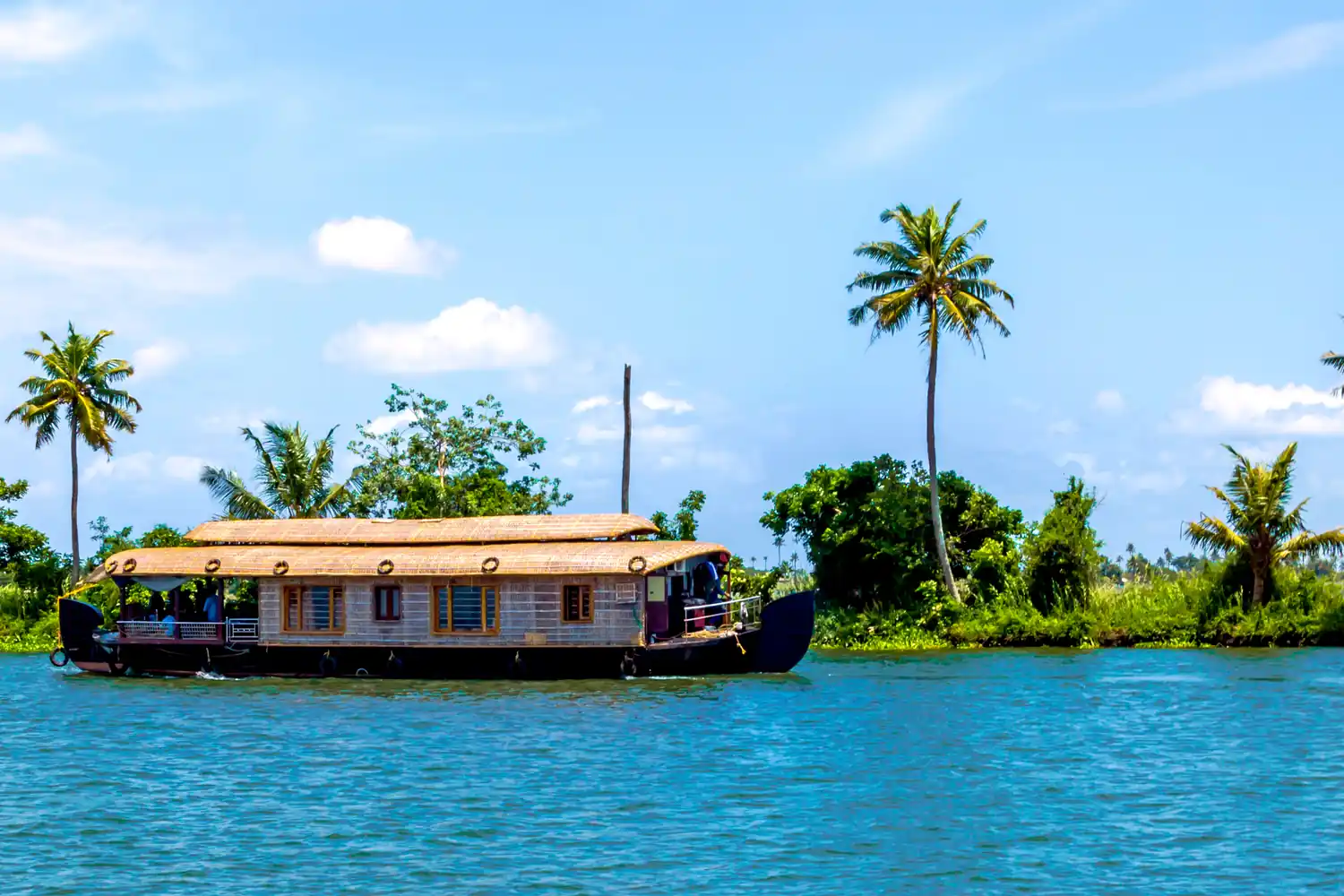
five days covers Kochi and the backwaters with a houseboat night, six to seven days adds Munnar and Thekkady, and ten days adds the beaches at Varkala or Kovalam. The best months are October to March. June to September is monsoon: lush and green, with heavy rain, and the traditional season for Ayurveda.
Kerala is a narrow strip of land between the Western Ghats and the Arabian Sea, and its roads are winding, so drives take longer than the distances suggest. A sensible plan allows two nights in most places and keeps each transfer to about four hours or less. The table shows what each length of trip can realistically include, and which of our tours matches it.
| Days | What it can cover | Pace | Our tour |
|---|---|---|---|
| 4 to 5 | Kochi, Kumarakom or Alleppey, and one houseboat night | Easy, mostly on the water | 5 Days Kerala Backwater tour |
| 6 to 7 | Kochi, Munnar, Thekkady and Alleppey | Balanced, with hills, wildlife and backwaters | 7 Days Kerala tour or 6 Days Munnar, Thekkady and Alleppey |
| 10 | The above, plus beaches at Varkala or Kovalam and more time in each place | Relaxed, with rest days | 10 Days Complete Kerala tour |
If you only have four days, resist the urge to add Munnar. The drive up to the hills is long, and the trip becomes a series of transfers. A short, well-chosen route is always better than a long, hurried one. For all of our options, see our Kerala tour packages.
Each place in Kerala offers something different. Choose by interest, not by name alone, and remember that the best trips mix hills, water and culture.
October to March is the most popular period, with dry, warm and bright weather. December and January are the busiest months, and houseboats and hotels need early booking. April and May are hot and humid. June to September is the south-west monsoon, with heavy rain and a green, quiet landscape. Kerala also receives some rain in October and November, so showers are possible even in the early part of the season.
| Months | What it is like | Best for |
|---|---|---|
| October to November | Warm and green after the rains; occasional afternoon showers | Quiet backwaters, good light and fewer crowds than December |
| December to February | Dry, bright and pleasant; the busiest period | Hill stations, wildlife, beaches and houseboats |
| March to May | Hot and humid, especially on the coast | Early starts, hill stations and air-conditioned travel |
| June to September | Monsoon: heavy rain, lush scenery and a slower pace | Ayurveda, quiet stays and travellers who accept the weather |
Festivals add colour to the calendar. Onam, a harvest festival that falls in late summer, brings floral designs, feasts and boat races, and the dates vary each year. For a view across India, see our guide to the best time to visit India.
Yes, if you accept the rain. The monsoon is the traditional season for Ayurveda, because the humid, cool air is thought to suit treatments and rest. The countryside is a deep green, waterfalls run, and crowds are low. The trade-offs are heavy rain, some cancelled boat rides and the chance of landslides on hill roads, which can delay transfers in places such as Munnar.
Choose the monsoon if you want a quiet, restful trip, an Ayurveda stay or the landscape at its most vivid. Choose the dry season if you want beaches, long boat days and the widest choice of activities. In either case, build in some flexibility, and avoid a tight schedule with fixed deadlines.
These sample routes show how the days can be arranged. We adjust them to your dates, your hotels and your interests.
On any route, order the places in a line, not a loop, and fly in and out of different airports where possible to avoid driving the same road twice. Ask us about arriving in Kochi and departing from Thiruvananthapuram, which saves a long final transfer.
Kerala’s roads are winding, and traffic, hills and rain add time. The table gives honest, approximate transfer times to help you plan. They are guides, not promises, and can change with the weather and the day of the week.
| Journey | About how long | Notes |
|---|---|---|
| Kochi airport to Munnar | 4 to 5 hours | Winding hill road; a stop for tea or a waterfall breaks the journey |
| Munnar to Thekkady | About 3 hours | Passes spice and cardamom country |
| Thekkady to Alleppey or Kumarakom | 3.5 to 4 hours | Descends from the hills to the backwaters |
| Alleppey to Kochi | 1.5 to 2 hours | Easy road; good for departure day |
| Alleppey to Varkala | About 3 hours | Heads south along the coast |
| Varkala to Kovalam | About 1.5 hours | Passes through the outskirts of Thiruvananthapuram |
As a rule, we keep the longest transfers for mornings, so you arrive with daylight left, and we avoid scheduling a major drive after a long boat day.
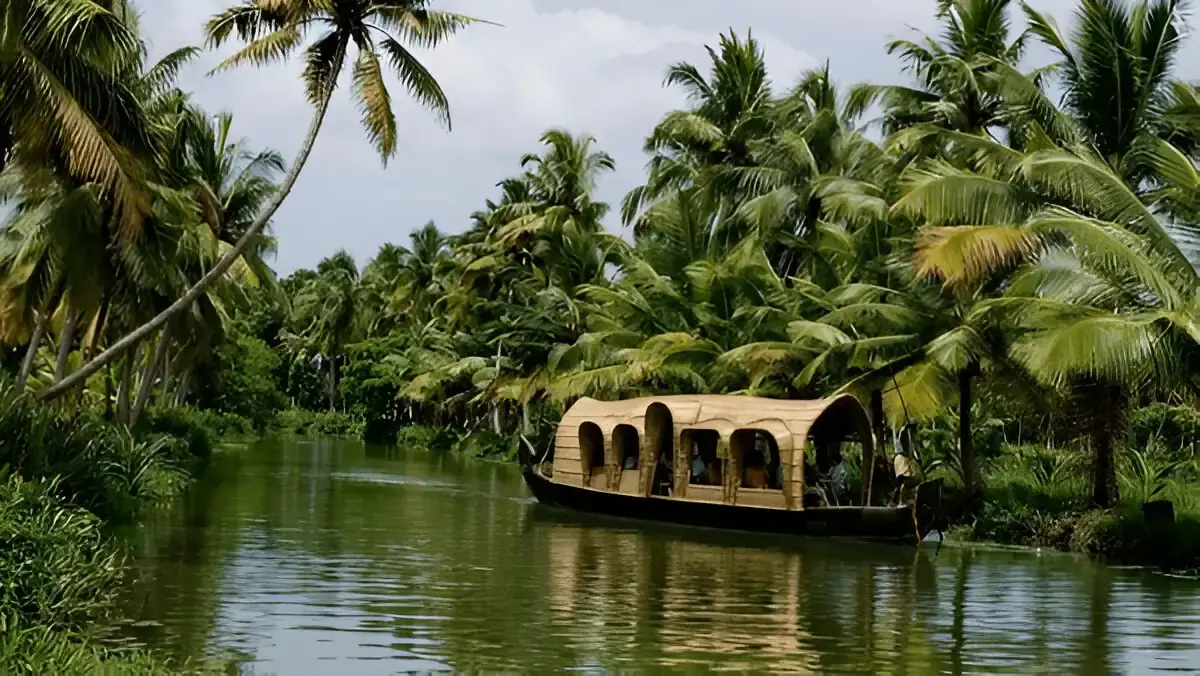
A houseboat, or kettuvallam, is a private boat with a crew, a cabin and meals. It cruises slowly through the canals in daylight and moors for the night. One night is enough for most travellers. The experience is about calm: village life on the banks, birds on the water, a simple Kerala meal on board and an early night.
Kerala is known for Ayurveda, the traditional system of massage, herbal treatment and rest. A short treatment or massage at a good centre is a pleasant addition to a trip, and longer stays suit those who want a proper programme. Choose a reputable centre and ask about the practitioners and the treatments, because quality varies.
The food is a highlight. Look for appam with stew, fish curries, coconut-based vegetable dishes and, on special occasions, a sadya, the vegetarian feast served on a banana leaf. For culture, Kathakali dance, Theyyam ritual performances in the north during the cooler months, temple festivals and martial arts shows give a sense of the region’s living traditions. Check current schedules, because performances vary.
If you add a beach stay, the choice is mostly about mood. Both are good, and neither is a mistake.
| Varkala | Kovalam | |
|---|---|---|
| Setting | A beach below a red clifftop, with cafes along the edge | Sheltered crescent bays with long-established resorts |
| Mood | Relaxed, with yoga and a travellers’ feel | Resort-style, with easy access and more services |
| Close to | About an hour from Thiruvananthapuram | Very close to Thiruvananthapuram |
| Good for | Quiet evenings, walks and sunsets | Families and those who like a resort routine |
Check the sea conditions before you swim, particularly in the monsoon, when currents can be strong, and follow the advice of lifeguards and your hotel.
Kerala pairs well with other regions because its warm, green landscape is such a contrast to the north. The most popular combination is the Golden Triangle followed by Kerala, with a domestic flight between Delhi and Kochi. See our Golden Triangle with Kerala tour. Mumbai and Goa also link easily with Kerala by air, and our Mumbai and Goa tour can be extended south.
Allow at least ten days for a combined trip, and avoid squeezing Kerala into the end of a long journey. If you are choosing the timing, October to March suits both regions. For a wider plan, see our India itinerary for first-timers.
Kerala rewards a calm pace, and a private driver makes that possible. The roads are narrow and winding, and an experienced driver knows the safest hours, the best stops and how to handle the weather. A local guide adds depth in Kochi, Munnar and Thekkady, explaining spices, tea, wildlife and history in a way that a signpost cannot. With a private car, you can stop for a tea estate, a village market or a viewpoint whenever you like.
Browse our Kerala tour packages, and compare the 7 Days Kerala tour and the 10 Days Complete Kerala tour. General information is available on Incredible India and the National Portal of India.
Five days covers Kochi and the backwaters with a houseboat night. Six to seven days adds Munnar and Thekkady. Ten days adds the beaches at Varkala or Kovalam and a slower pace.
October to March is the most popular period, with dry, bright weather. December and January are the busiest, so book early. Some rain is possible in October and November.
Yes, if you accept heavy rain. The landscape is lush, crowds are low and it is the traditional season for Ayurveda. Boat trips and hill transfers can be disrupted, so plan with flexibility.
By road, usually in two stages with a night in Thekkady. Munnar to Thekkady takes about three hours, and Thekkady to Alleppey about 3.5 to 4 hours. The road is winding, so allow extra time in rain.
For most travellers, yes, for one night. It is a calm, scenic way to see the backwaters, with meals on board. A second night is rarely needed. Ask about air-conditioning hours and the standard of the boat.
Yes. A domestic flight links Delhi and Kochi, and many travellers see the Golden Triangle first and then Kerala. Allow at least ten days for the combination.
No. Periyar is a beautiful reserve with boat rides and walks, but wildlife sightings are never guaranteed. Early rides improve the chances of seeing animals and birds.
Varkala suits travellers who like a relaxed, clifftop setting and quiet evenings. Kovalam is closer to Thiruvananthapuram and suits families and those who prefer a resort routine.
Yes. The pace is gentle, and houseboats, tea estates and beaches suit all ages. Tell us about mobility needs, because hill roads and boat access vary.
Light, breathable clothes, a rain jacket in the monsoon, comfortable shoes, insect repellent and a small, soft bag for the houseboat. Carry a warm layer for Munnar, where evenings can be cool.
Related journeys: Kerala Tour Packages, 7 Days Kerala Tour, 10 Days Complete Kerala Tour.

Mirza Shadab Beg began as a local tour guide in Agra and founded Travelage in 2003. He has worked as a local handling agent for BTI Sita, HRG Sita, Kuoni Travel Business, Century Travel and Gilpin Travel. Travelage is rated 4.9 on Tripadvisor from 466 reviews, is registered with the Ministry of Tourism NIDHI database (ID EUP000616), and has been recognised by Les Clefs d’Or India. Facts such as timings and rules are checked before each update, and may change.

Tell us your dates and how many days you have. We will plan the route, the houseboat night and the pace.