
The evening fire ceremony on the Ganges is the best-known ritual in Varanasi. This guide explains where to watch from, when to arrive, how to behave and how to plan the evening, with notes on the dawn alternatives and festival nights.
Reviewed by Mirza Shadab Beg, Founder, Travelage India, Agra · Last updated 28 October 2026 · 14 min read
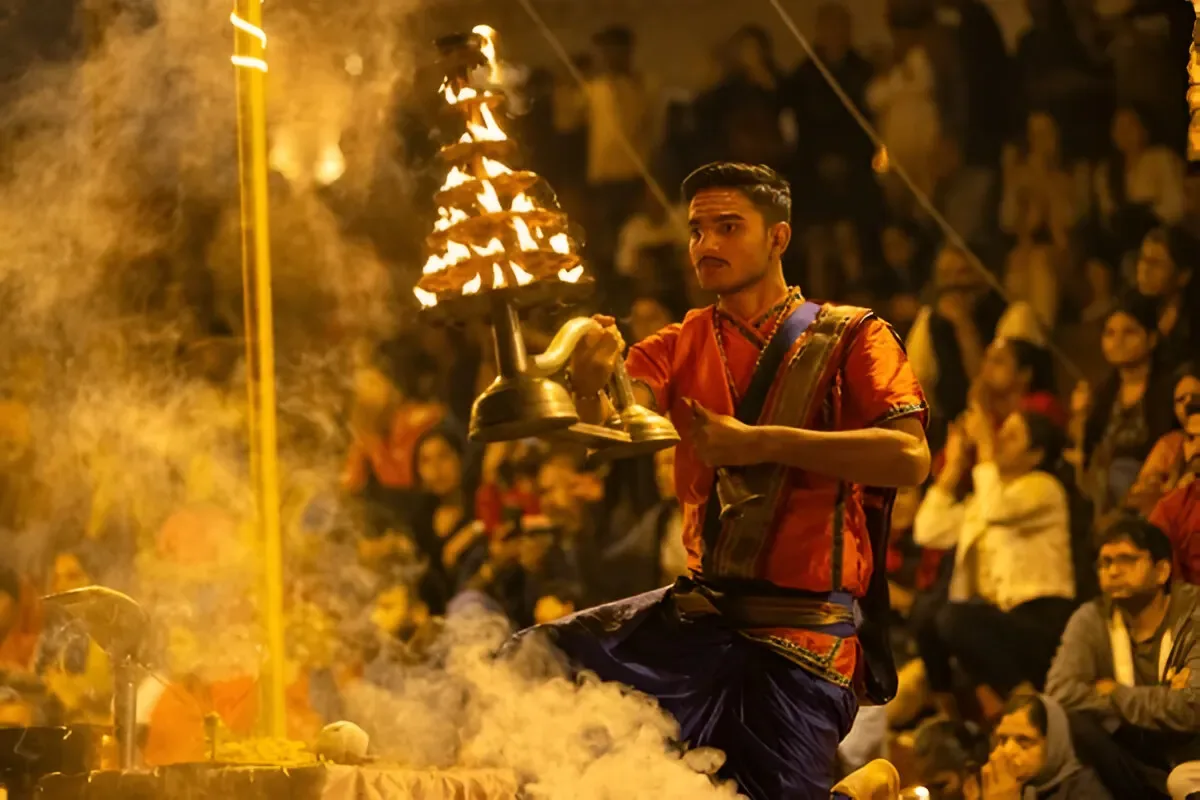
the Ganga aarti is a daily fire ceremony held at about sunset on the ghats of Varanasi, most famously at Dashashwamedh Ghat. Arrive 45 to 60 minutes early. You can watch from the steps, a boat or a balcony, and a dawn programme is held at Assi Ghat. Start times follow the sunset, so confirm them on the day.
The Ganga aarti is a ritual of light, fire, incense and chanting offered to the river Ganga each evening on the ghats of Varanasi. Priests stand on raised platforms facing the water and move large brass lamps in slow circles, while bells, conch shells, drums and hymns fill the air. For many Hindus the river is a goddess, and the aarti is a way of thanking her and asking for blessings. For visitors it is one of the most memorable evenings in India, because so much is happening at once and yet the mood is calm and focused.
The ceremony is not a performance staged only for tourists, even though many travellers attend. Local families, pilgrims and devotees come each night, and the steps fill with people who know the hymns by heart. Watching with that in mind, and with some quiet respect, changes how the evening feels. This guide explains where to watch, when to arrive, how to behave and how to fit the aarti into a wider plan for Varanasi, including notes on the dawn alternatives and festival nights.
The best-known aarti takes place at Dashashwamedh Ghat, the main ghat in the heart of the old city, and it is the one most visitors mean when they say the Ganga aarti. It is run by a group of priests who perform it daily, with several platforms set along the water’s edge. Other ghats also hold their own aartis, usually smaller and quieter, and Assi Ghat in the south has become a popular alternative.
| Place | What it is like | Good for |
|---|---|---|
| Dashashwamedh Ghat | The main aarti, with several priests, large crowds, music and the busiest atmosphere | First-time visitors who want the full spectacle |
| Assi Ghat | A calmer setting at the southern end of the ghats, with a different crowd and a more local feel | Travellers who prefer space and a gentler evening |
| Smaller ghats | Local, informal rituals at various ghats, often with only a few people | Travellers who enjoy a quiet visit and have a guide who knows the neighbourhood |
Timings, formats and arrangements at each ghat can change, so confirm them on the day with your guide or hotel. Note that the cremation ghats are a separate matter, and are places of mourning. Do not photograph cremations, and keep a respectful distance.
The evening aarti starts at about sunset, which means the time shifts through the year. It begins earlier in winter, when the sun sets early, and later in summer, when evenings are long. Because the exact time moves, do not rely on a figure you read years ago. Ask your guide, your hotel or the organisers on the day, and aim to arrive well ahead of the start.
| Season | What the evening is like | Tip |
|---|---|---|
| October to February | Cool, clear evenings with an early sunset | Bring a light layer; the river air can feel chilly after dark |
| March to May | Warm to hot, with a late sunset and a humid evening | Carry water; arrive a little earlier to find shade and a seat |
| June to September | Monsoon: the river rises and steps can be wet or partly covered | Expect changes to the usual viewing spots, and check conditions with your guide |
The ceremony usually lasts about 45 minutes to an hour. Allow another hour on either side for getting there, finding a place and leaving, especially if you plan to watch from a boat.
The details vary by ghat and by evening, but the main stages follow a recognisable pattern. Knowing the order helps you follow what is happening and avoid leaving too early.
There is no single best place. Each choice gives a different experience, and the right one depends on your energy, your comfort and how much you care about being close to the priests. The table sets out the main options.
| Where | What it is like | Best for | Things to know |
|---|---|---|---|
| On the steps of the ghat | Closest to the priests, with the best sense of being part of the crowd | Travellers who enjoy atmosphere and can sit on stone | Arrive early; seating is on stone steps, and it gets very crowded |
| From a boat on the river | A calmer view from the water, with the lamps reflected in the river | Travellers who want a wider view and a less crushed evening | Boats anchor in rows; the first row sees best, so go early |
| From a balcony or rooftop | A comfortable, seated view from above, away from the crowd | Older travellers, families and those who dislike crowds | Often arranged through hotels or restaurants; sound and view vary |
Our usual advice for a first visit is to watch from a boat or a good balcony, because the view is clearer and the evening is easier on the body. If you want to feel the energy of the ghat, add a short walk along the steps before or after the ceremony. A guide can choose a spot that matches your plan and keeps your party together.
Arrive 45 to 60 minutes before the start to find a place on the steps or to board a boat without a rush. On busy evenings, such as weekends, holidays and festival nights, allow more time. The old city has narrow lanes, and vehicles are usually kept some distance from the ghats, so you may need to walk part of the way. Your guide or driver can tell you where the usual drop-off point is and which route is easiest.
If you are going by boat, your guide can arrange it before the evening, and many boatmen will meet you near the main ghat. Agree the plan, the route and the return before you step on board. Choose a boat with life jackets and a calm crew, and remember that the river is dark after sunset. If anyone in your party finds stairs or crowds difficult, say so in advance, because it affects where you should sit.
Many visitors assume the aarti is only an evening event. In fact, dawn is also an important time on the ghats. At Assi Ghat, a morning programme known as Subah-e-Banaras combines a short ceremony with music, and is popular with travellers who prefer a calm start. Its format and schedule can change, so check before you go.
The sunrise boat ride is a separate experience, and one of the best things to do in Varanasi. The river is quiet, the light is soft, and pilgrims bathe and pray along the steps. If you have two nights, we usually suggest the evening aarti on the first night and the sunrise boat ride the next morning, because the two together give a fuller picture of how the ghats work through the day. For a longer plan, see our Varanasi itinerary for 3 days.
The aarti is a religious ceremony, and a little care goes a long way. Dress modestly, with covered shoulders and knees, and wear shoes you can slip off easily if you need to. Keep your voice low, switch off ringtones and avoid standing in front of other people for long. If you take photographs, do so quietly and ask before photographing individuals at prayer. Flash can be disruptive, so avoid it.
Do not step on flower offerings or lamps placed on the steps, and be careful with candles and fire, especially in crowded places. You may be invited to buy a small lamp to float on the river. This is a lovely custom, but you are never obliged to buy one, and a polite refusal is perfectly acceptable. Respect also means leaving the cremation ghats alone as a place for photographs.
Most visitors enjoy the aarti without any trouble. The main concerns are the crowd, the steps and the lanes. On busy evenings the ghat can be tightly packed, and it is wise to keep valuables secure and your bag in front of you, because pickpockets operate wherever crowds gather. Keep your party together, and agree a meeting point in case you are separated.
For children, a boat or balcony is usually more comfortable than the steps, and early arrival avoids long waits in the crowd. For older travellers or anyone who finds stairs hard, a boat or a seated balcony is often the best choice, and a driver who can drop you close to the boarding point saves a long walk. Think also about the weather: in summer, the heat lingers into the evening, and in winter, the river air can feel cold.
Some evenings in Varanasi are very different from the usual aarti. Dev Deepawali, celebrated on the full moon of the month of Kartik, usually in November, is the most famous. On that night the ghats are lit with thousands of small lamps, and the river is crowded with boats. It is spectacular, but also extremely busy, with high demand for rooms, boats and good viewing spots. Dates follow the lunar calendar and change every year.
If a festival evening is part of your plan, book early, expect crowds and restrictions on movement, and allow extra time for every journey. Boats are often fully booked, and some viewing spots may be closed for security. If you prefer a calmer visit, choose a different evening. See our guide to the best time to visit India for festival timing across the country.
A good Varanasi plan balances the evening aarti with a quiet morning on the river and a visit to the old lanes and Sarnath, where the Buddha first taught. The table shows how the aarti can fit into plans of different lengths.
| Nights | How the aarti fits | What else to include |
|---|---|---|
| 1 night | Arrive in time for the evening aarti, then a sunrise boat ride before you leave | The old lanes at a calm hour |
| 2 nights | Aarti on the first evening, sunrise boat and Sarnath the next morning | A silk weaver’s workshop or a temple visit |
| 3 nights | A slower pace, with the aarti from the steps one evening and a boat on another | Time for the old city, the university grounds and a day trip |
A guide chooses the viewing spot, arranges the boat, explains each stage of the ritual and keeps your party together in the crowd. A driver who knows where to drop you saves a long walk through the lanes. See our 3 Days Varanasi tour, our Varanasi and Bodh Gaya Buddhist tour and our North India spiritual journey. More general information is on Incredible India and the National Portal of India.
It starts at about sunset, so the time shifts through the year, earlier in winter and later in summer. Confirm the start time on the day with your guide or hotel, and arrive 45 to 60 minutes early.
At Dashashwamedh Ghat, in the heart of the old city. Assi Ghat in the south also holds an aarti and is calmer.
Yes, it is a daily ritual. Arrangements can change during floods, festivals or special events, so check before you go.
Steps put you closest to the priests and the crowd. A boat offers a clearer, calmer view of the lamps reflected in the river. Many travellers choose a boat for comfort, and a balcony for a seated view.
Usually about 45 minutes to an hour. Allow extra time for travel, finding a place and leaving.
Yes. A morning programme called Subah-e-Banaras takes place at Assi Ghat, and the sunrise boat ride is another popular way to see the ghats at dawn. Check the current schedule.
Modest clothes with covered shoulders and knees, and shoes that are easy to slip off. Carry a light layer in winter, because the river air can be cool.
Yes, in most places, but be quiet and respectful, avoid flash and ask before photographing individuals at prayer. Never photograph cremations.
Yes, with some planning. A boat or a seated balcony is usually more comfortable than the steps. Tell us about any mobility needs in advance.
A festival on the full moon of Kartik, usually in November, when the ghats are lit with thousands of lamps. It is spectacular but very busy, so book early.

Mirza Shadab Beg began as a local tour guide in Agra and founded Travelage in 2003. He has worked as a local handling agent for BTI Sita, HRG Sita, Kuoni Travel Business, Century Travel and Gilpin Travel. Travelage is rated 4.9 on Tripadvisor from 466 reviews, is registered with the Ministry of Tourism NIDHI database (ID EUP000616), and has been recognised by Les Clefs d’Or India. Facts such as timings and rules are checked before each update, and may change.

Tell us your dates. We will choose the viewing spot, arrange a boat and explain the ritual.