two days covers the dawn boat ride on the Ganges, the old lanes, Sarnath and one evening aarti. A third day lets you slow down, visit a temple or two, see the silk weavers and watch the aarti from the water. Arrive in time for the evening aarti on day one and take the boat at sunrise on day two.
Why does Varanasi need a plan?
Varanasi is not a city of monuments in the way that Agra or Jaipur are. Its sights are the river, the steps that lead down to it, the lanes behind them and the rituals that fill every hour. Because those rituals follow the clock, an unplanned visit can miss the best of them: the dawn light on the ghats, the evening aarti, the quiet of early morning in the lanes.
A plan also protects your energy. The old city is a maze of narrow, crowded alleys, and the ghats mean a great many steps, so the day feels longer than it looks. Good sequencing keeps the strenuous parts to the cooler hours and leaves the afternoon for rest.
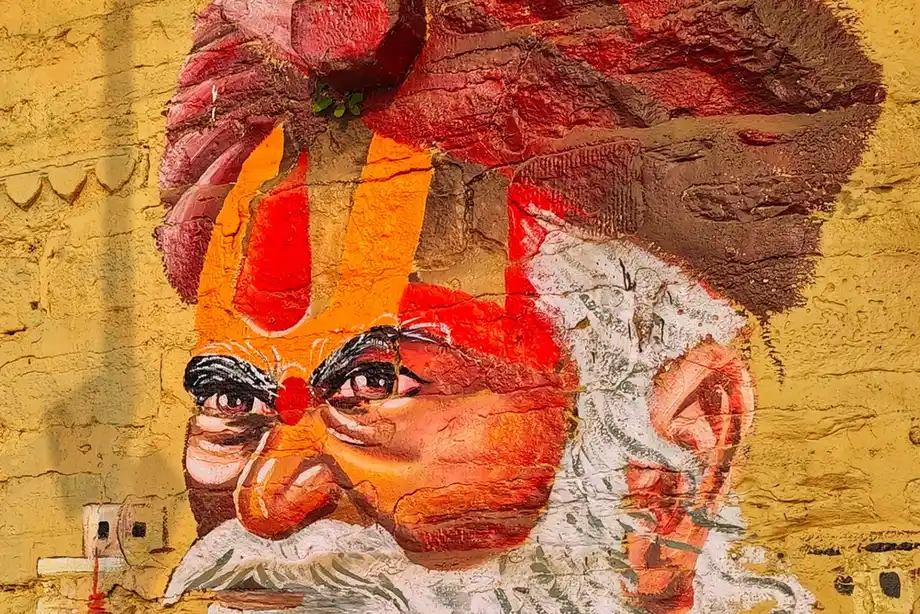
A painted wall mural of a bearded sage in the lanes near the ghats.
How many days do you need in Varanasi?
Two full days is the minimum for the essentials and is a sound choice if Varanasi is one stop on a longer route. Three days is better. It lets you repeat the river at a different hour, add a temple visit without rushing and spend time with the crafts for which the city is known, such as silk weaving.
| Length of stay | What you can see | Pace |
|---|
| 1 night, 2 days | Evening aarti, sunrise boat, old lanes, Sarnath | Full but manageable |
| 2 nights, 3 days | All of the above, plus a temple, weavers and the aarti from a boat | Comfortable |
| 3 nights, 4 days | Adds Ramnagar Fort across the river, a day of slow walks and a day trip | Relaxed |
What happens on day 1: arrival and the evening aarti?
Plan to arrive by early afternoon. Varanasi is about 25 km from the airport and the drive can take an hour or more in traffic, so build in slack. Check in, rest, and let the heat of the day pass.
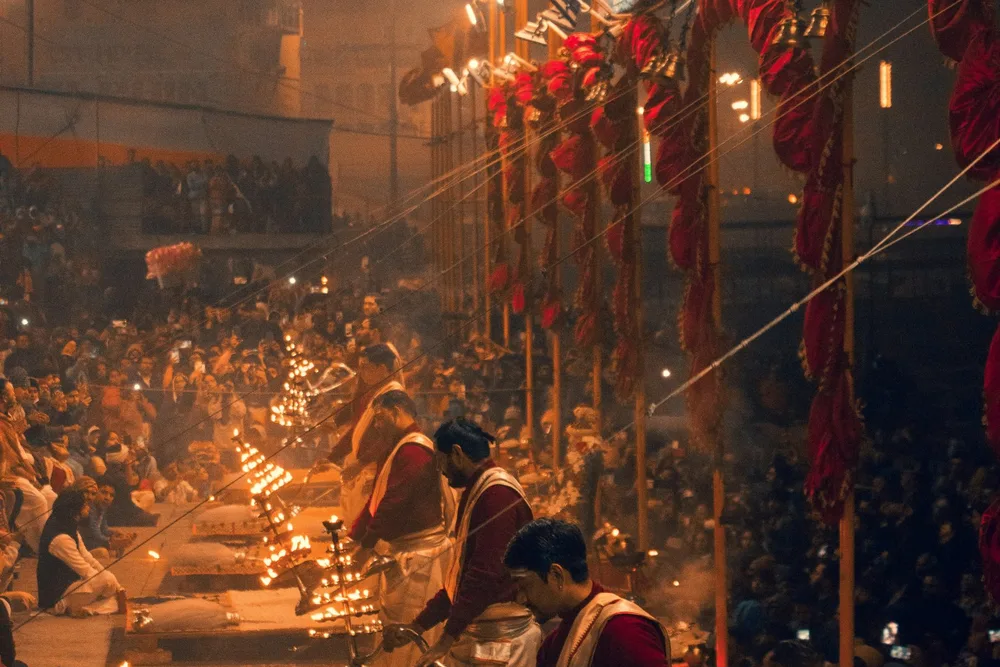
In the late afternoon, walk with your guide to the river through the lanes. This is the right moment for a first look, because the light is softer and the crowds of the middle of the day have thinned. Then watch the Ganga aarti at Dashashwamedh Ghat at sunset. It is a ceremony of fire, conch shells, bells and chanting, performed by priests on raised platforms, and it is held every evening. Arrive early if you want a good place on the steps, or take a boat for an uncrowded view from the water. Our Ganga aarti guide explains where to sit and what to expect.
The evening Ganga aarti: priests with tiered brass lamps, with the crowd gathered on the steps.
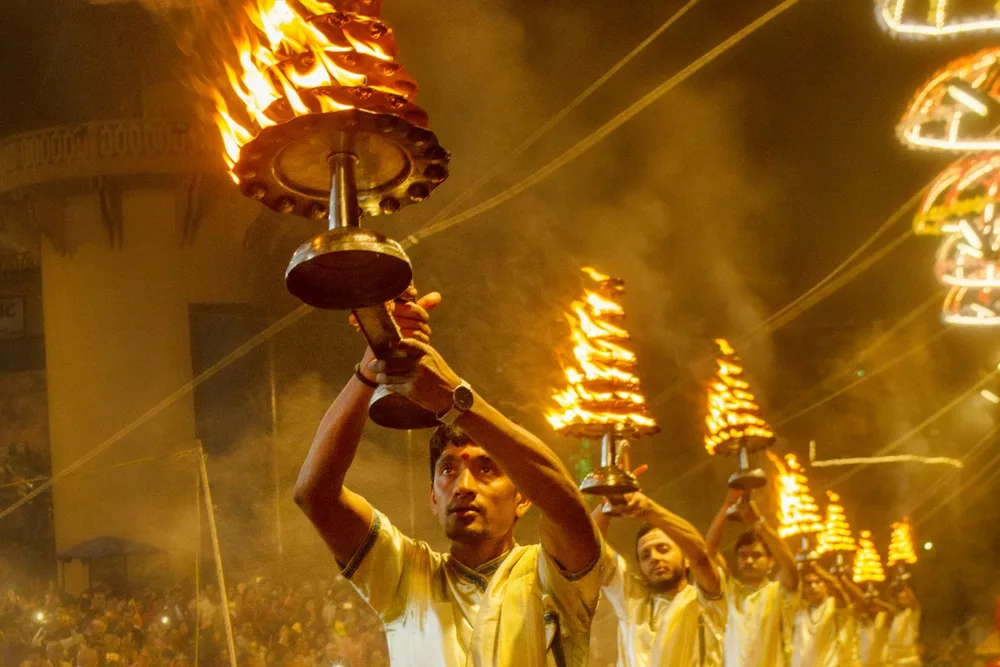
A priest raises a flame lamp during the aarti.
What happens on day 2: dawn on the river and Sarnath?
Start before sunrise. A rowing boat along the ghats at first light is the single most memorable hour of a Varanasi stay. Pilgrims bathe, priests prepare their offerings, and the river is full of soft colour. Your guide will name the main ghats as you pass, including Assi Ghat at the southern end and the cremation ghats, which are places of deep religious meaning and should be viewed respectfully, without photographs.
After the boat, return for breakfast, then walk through the old lanes with your guide. Late morning is a good time to rest. In the afternoon, drive to Sarnath, about 10 km away, where the Buddha is said to have given his first sermon. Walk around the Dhamek Stupa, the ruins and the archaeological museum. The park is calm and green, a contrast with the city, and it is also the base for our Varanasi and Bodh Gaya Buddhist tour.
What happens on day 3: a slower pace?
With a third day you can leave the checklist behind. Start with a leisurely breakfast, then visit one or two of the temples that matter to local families. The Kashi Vishwanath temple is the most famous, and its security rules are strict. Phones, bags and cameras are often not allowed inside, and queues vary by day, so rules should be checked on the day and the visit planned with your guide. Other options include the Durga temple and the modern Bharat Mata temple.
In the afternoon, visit a weaving workshop, since Varanasi silk is renowned across India, and look at the brocade as it is made on a hand loom. You may also walk the grounds of Banaras Hindu University. End the day with a second aarti, this time from a boat, which gives a very different view of the same ceremony.
Street murals add colour to the walk between the lanes and the river.
Where should you eat and what should you try?
Varanasi is a strictly vegetarian city in many of its old quarters, and the food is excellent. Look for kachori and sabzi for breakfast, lassi in clay cups, and the local sweets made of milk and sugar. Street food is tempting, and a sensible approach is to eat at busy stalls where the food is fresh and hot, and to drink only bottled or filtered water. If your stomach is sensitive, ask your guide to suggest a clean place rather than guess.
How does a private guide change Varanasi?
More than in most cities, a guide here is the difference between seeing and understanding. The ghats look like steps until someone explains why each has its own story, why a bather faces the sun, and what the priests are doing with their lamps. A guide also finds a path through the lanes that avoids the worst crowds, and helps you behave appropriately at religious sites.
A private driver removes the problem of finding a vehicle in a crowded city and, with the hotel close to the river, saves long walks after dark. If you want help with the boat, the aarti and Sarnath on a fixed schedule, see our 3 Days Varanasi tour or Varanasi spiritual tours.
Which mistakes should you avoid in Varanasi?
- Skipping the dawn boat to sleep in. It is the best hour in the city and the heat comes later.
- Photographing the cremation ghats. It is disrespectful, and boatmen or locals may object strongly.
- Wearing revealing clothes. Cover shoulders and knees, particularly at temples.
- Agreeing to a “special” boat ride or silk shop offered by touts. Settle the arrangements with your hotel or guide beforehand.
- Planning too much on one day. Heat, crowds and steps wear you out quickly.
When is the best time to visit Varanasi?
October to March is the best season, with clear skies and moderate temperatures. December and January mornings are cold and often foggy, which is atmospheric on the river but may delay flights. Summer, from April to June, is very hot. During the monsoon the river rises and some ghats flood, so boat routes change. Festival dates such as Dev Deepawali, usually in November, follow the lunar calendar and bring great crowds, so confirm them early. For visa information before you travel, use the official Indian e-visa site.
Frequently asked questions
How many days do I need in Varanasi?
+
Two full days covers the main sights, and three days is more relaxed. If you are adding Sarnath and a temple, three days is more comfortable.
What is the best time of day for a boat ride?
+
Sunrise, when the ghats are most active and the light is soft. The evening is also lovely for watching the aarti from the water.
How far is Sarnath from Varanasi?
+
About 10 km from the city, 30 to 45 minutes by car depending on traffic.
Can I enter Kashi Vishwanath with a phone?
+
Usually not. Phones, bags and sometimes cameras must be left outside, and rules can change, so ask your guide on the day.
Is Varanasi safe for solo travellers?
+
Yes with normal care, as it has a busy visitor scene. Avoid touts, agree arrangements in advance and be careful in the lanes after dark. Women should dress modestly.
Is the Ganges water safe to touch?
+
Pilgrims bathe in it as an act of faith, but the water quality is poor, and visitors should avoid immersion or drinking it. Boat rides are fine.
Do I need to be fit for Varanasi?
+
You need to be comfortable with steps, uneven ground and walking in crowds. If mobility is a concern, tell us beforehand so we can plan boats and vehicle access.
Which airport serves Varanasi and how long is the transfer?
+
Varanasi has its own airport about 25 km from the city. The road transfer usually takes an hour or more, depending on traffic.
Mirza Shadab Beg, Founder, Travelage India
Mirza Shadab Beg began as a local tour guide in Agra and founded Travelage in 2003. He has worked as a local handling agent for BTI Sita, HRG Sita, Kuoni Travel Business, Century Travel and Gilpin Travel. Travelage is rated 4.9 on Tripadvisor from 466 reviews, is registered with the Ministry of Tourism NIDHI database (ID EUP000616), and has been recognised by Les Clefs d’Or India. Facts such as timings and rules are checked before each update, and may change.