
A day-by-day Amritsar itinerary for three days from Delhi: how to travel, when to see the Golden Temple, what to know about the langar, Jallianwala Bagh, the Partition Museum and the Wagah border ceremony.
Reviewed by Mirza Shadab Beg, Founder, Travelage India, Agra · Last updated 28 October 2026 · 10 min read

Amritsar is about 450 km from Delhi, a flight of about an hour and a quarter or a six-hour Shatabdi train. A good Amritsar itinerary for 3 days sees the Golden Temple at dusk and at dawn, Jallianwala Bagh and the Partition Museum, the Wagah border ceremony, and a slow day for food. Two nights also works.
Amritsar is in the north-west corner of Punjab, close to the border with Pakistan, and it is about 450 km from Delhi. You have three realistic ways to get there, and the best one depends on how much time you have and how you like to travel.
| Way | Time | Notes |
|---|---|---|
| Flight | About 1 hour 15 minutes | Fastest. Best when time is short; allow for airport time at both ends |
| Shatabdi train | About 6 hours | A comfortable day train with seats, meals and a calm pace, and it arrives in the afternoon |
| Road | About 8 to 9 hours | Long and tiring. Possible as part of a longer road journey, but rarely the best choice |
Our usual suggestion is to fly one way and take the train the other, or to fly both ways if the rest of the trip is already full. A private car is more useful once you are in Amritsar, where the sights are spread across the city and out to the border. If you want to combine the temple with Agra and Jaipur, see our Golden Triangle with Amritsar tour.
For most visitors, two nights and a day and a half is the efficient minimum, and three days is the relaxed version. Amritsar is a city where a slower pace pays back: the Golden Temple is best seen more than once, at dusk and at dawn, and the food deserves a proper afternoon. A rushed trip means one quick visit to the temple, a drive to the border and a flight home. A three-day trip means all of that plus time to breathe.
| Day | Morning | Afternoon | Evening |
|---|---|---|---|
| Day 1 | Arrive, rest, a light lunch | Jallianwala Bagh and the Partition Museum | The Golden Temple at dusk and the night ceremony |
| Day 2 | The Golden Temple at dawn, then the langar | Durgiana Temple and old city lanes, then drive to the border | Wagah-Attari flag ceremony at the end of the day |
| Day 3 | Gobindgarh Fort and a food walk | Optional: Harike wetland in winter, or free time | Depart |
If you only have two days, combine day one and day two: drop the fort and the food walk, and keep the temple twice, the Bagh and the border.
Arrive, check in and rest. In the afternoon, start with Jallianwala Bagh, a walled garden a few minutes’ walk from the temple. On 13 April 1919 British troops opened fire on a crowd gathered there, killing and wounding a great many people. The memorial, the narrow entrance, the well and the bullet marks on the walls make it a quiet, moving place. Allow 45 minutes.
The Partition Museum is a short walk away, inside the old Town Hall, and it tells the story of 1947 through oral histories, letters and everyday objects of the families who crossed the new border. It is not a cheerful museum, but it is a thoughtful one, and it helps you understand why Amritsar, so close to the line, feels the way it does. Allow an hour and a half.
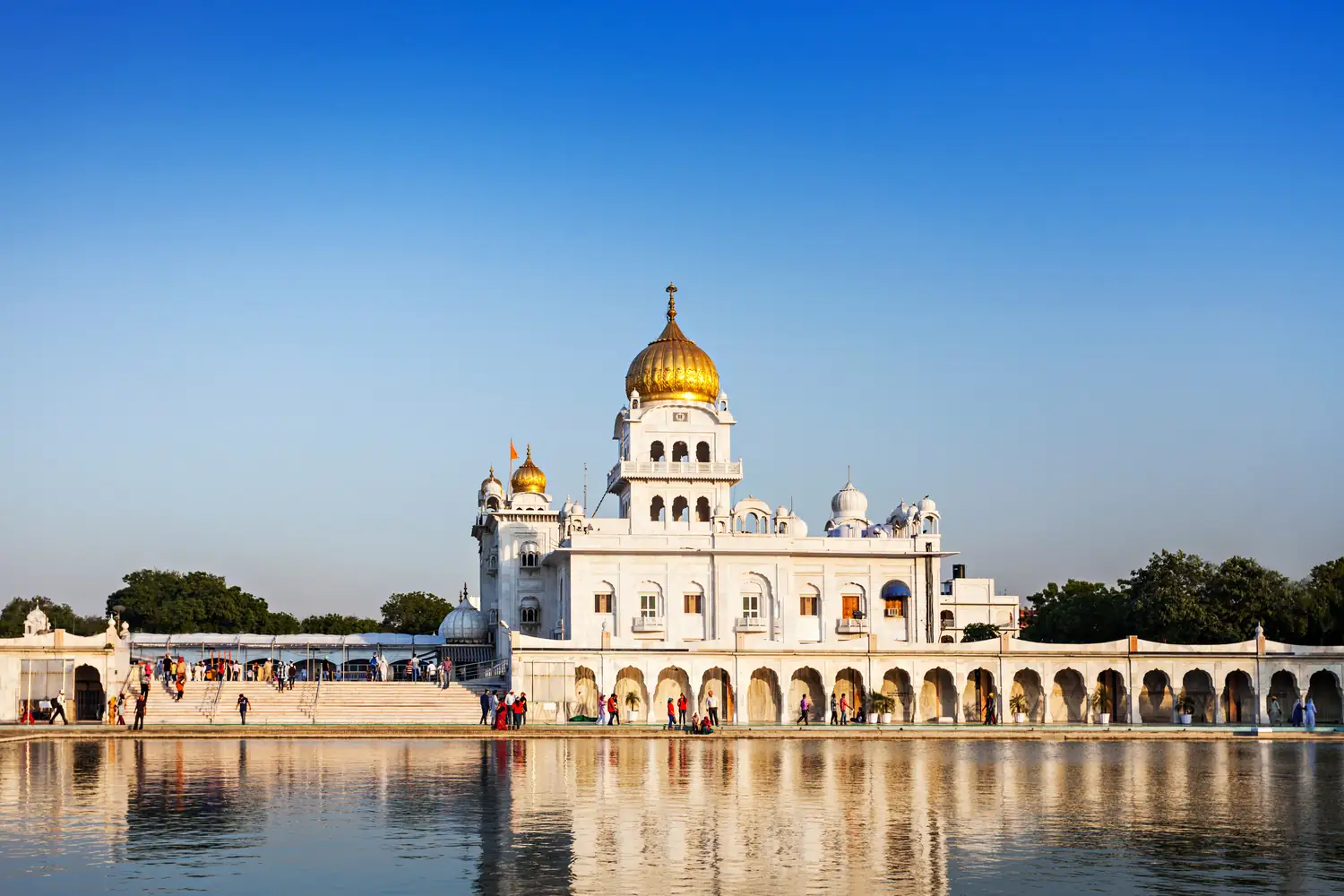
Then walk to the Golden Temple for the evening. Go before sunset, when the white marble complex and the gold-leaf sanctum begin to glow in the pool. Walk the full circuit of the Amrit Sarovar, the sacred tank, before you queue for the sanctum. If you can, stay until late in the evening, when the Guru Granth Sahib is carried in a palanquin ceremony from the sanctum to rest. Timings of ceremonies vary, so ask your guide on the day.
If you do only one early start in Amritsar, make it this one. At dawn the temple is cool, the water is still and the sound of hymns carries across the pool. The morning ceremony in which the scripture is brought back to the sanctum starts before sunrise, and the early hours are the quietest time to be inside.
After the visit, eat in the langar, the free community kitchen that serves vegetarian meals to everyone, regardless of religion or background. It is run largely by volunteers, and a very large number of people eat there each day. Sit on the floor in a row, accept the food with both hands and take only what you can finish. Many guests tell us the langar is the part they remember most.
Later in the day, visit the Durgiana Temple, a Hindu temple on a pool that echoes the design of the Golden Temple, and walk through the narrow lanes of the old city. In the late afternoon, drive to the border at Wagah-Attari for the flag-lowering ceremony. Plan the day so that you arrive well before the ceremony.
On the last day, visit Gobindgarh Fort, a former military fort that has been opened to visitors with exhibitions and evening shows. It is a good choice if you have children or like a more modern form of heritage. If you are visiting in winter, ask about a morning at Harike Wetland, a large wetland about 60 km from the city that draws migratory birds. It is only worth the long drive if you enjoy birds and have the time.
Spend the rest of the morning on food. Amritsar is known for its Amritsari kulcha, a stuffed, tandoor-baked bread served with chickpea curry, and for its lassi, fried fish, jalebi and sweets. Eat where the locals queue, avoid raw salads and ice in the warmer months, and drink bottled water. Vegetarian meals dominate, and good non-vegetarian food is easy to find outside the temple area.
The Golden Temple (Sri Harmandir Sahib) is the holiest shrine of the Sikh faith and is open to people of all backgrounds. Entry is free, and a few simple rules show respect.
The site is open almost round the clock, which is why a visit at midnight or in the small hours is possible. The Archaeological Survey and the national tourism site Incredible India give general guidance for visitors.
Every day the Indian and Pakistani border forces hold a ceremony at the Wagah-Attari crossing, about 30 km from Amritsar, as the flags are lowered at sunset. It is a theatrical event, with high marching, stamping, loud cheering and a crowd that sings and dances. Some visitors love the energy, and others find the nationalism too loud. If you are curious, it is a memorable evening; if you prefer quiet, you can skip it and spend that time at the temple.
Practical points: the ceremony time follows sunset, so it changes with the season, and the format of the event can change as well. Carry your passport, because you may be asked for identification. Arrive early, as seating is limited and security checks take time. Avoid bringing large bags. Your guide will tell you the plan on the day and will choose the best entrance and seating area.
Amritsar has a clear winter and a very hot summer, so the season matters more than you might expect.
| Season | Months | What to expect |
|---|---|---|
| Best | October to March | Cool to cold weather, clear days, comfortable walking. December and January mornings can be foggy and cold |
| Festival times | April (Baisakhi), October or November (Diwali), November (Guru Nanak Gurpurab) | Very crowded but beautifully lit; book early and expect long queues |
| Hot | April to June | Hot and dry. Visit at dawn and dusk, and rest in the middle of the day |
| Monsoon | July to September | Humid with heavy showers; fewer visitors and a green countryside |
The dates of Diwali and Gurpurab change each year, so check before you fix your travel dates.
Amritsar is a city where the small details make the visit. A guide can explain the history of the temple and the meaning of the rituals, take you to the langar without confusion, and help you decide which parts to see when the crowds are thin. A private driver takes the stress out of the long road to the border, drops you at the right gate and picks you up after the ceremony without a scramble through the car park.
If you are adding Amritsar to a longer journey, our team can arrange the flights or the train, and the transfers on both sides. See Golden Triangle tours for routes that include the temple, or ask us for a plan that starts from Amritsar and flows back to Delhi.
About 450 km. By air it is about an hour and a quarter, by Shatabdi train about six hours and by road about eight to nine hours.
Two nights is the efficient minimum, with one dusk and one dawn at the Golden Temple. Three days is more relaxed and adds the fort, the food and a slower morning.
The langar is the community kitchen at the Golden Temple. It serves vegetarian meals to everyone, regardless of background, and it is run mostly by volunteers. You sit on the floor and eat what is served.
Modest clothes with shoulders and knees covered, a head covering and no shoes or socks. Scarves are available at the entrance, and there is a shoe counter and a foot-wash channel.
Daily, around sunset, so the time changes with the season. The format can also change, so check on the day and arrive well before it starts.
Yes. It is open almost round the clock, and the early morning and late evening are the quietest times.
Yes. Most guests fly between Delhi and Amritsar and add two nights to their route. See our Golden Triangle with Amritsar journey for a plan that fits.
A museum in the old Town Hall that tells the story of the 1947 division of India through personal stories and objects. It is a thoughtful stop, and most visitors need about an hour and a half.
Related journeys: Golden Triangle with Amritsar, Golden Triangle Tours, Plan Your Trip.

Mirza Shadab Beg began as a local tour guide in Agra and founded Travelage in 2003. He has worked as a local handling agent for BTI Sita, HRG Sita, Kuoni Travel Business, Century Travel and Gilpin Travel. Travelage is rated 4.9 on Tripadvisor from 466 reviews, is registered with the Ministry of Tourism NIDHI database (ID EUP000616), and has been recognised by Les Clefs d’Or India. Facts such as timings and rules are checked before each update, and may change.
Tell us your dates. We will plan the flight, the temple visits and the border.